
Short answer
- 6 to 9 months ahead: a healthy starting point for many private journeys.
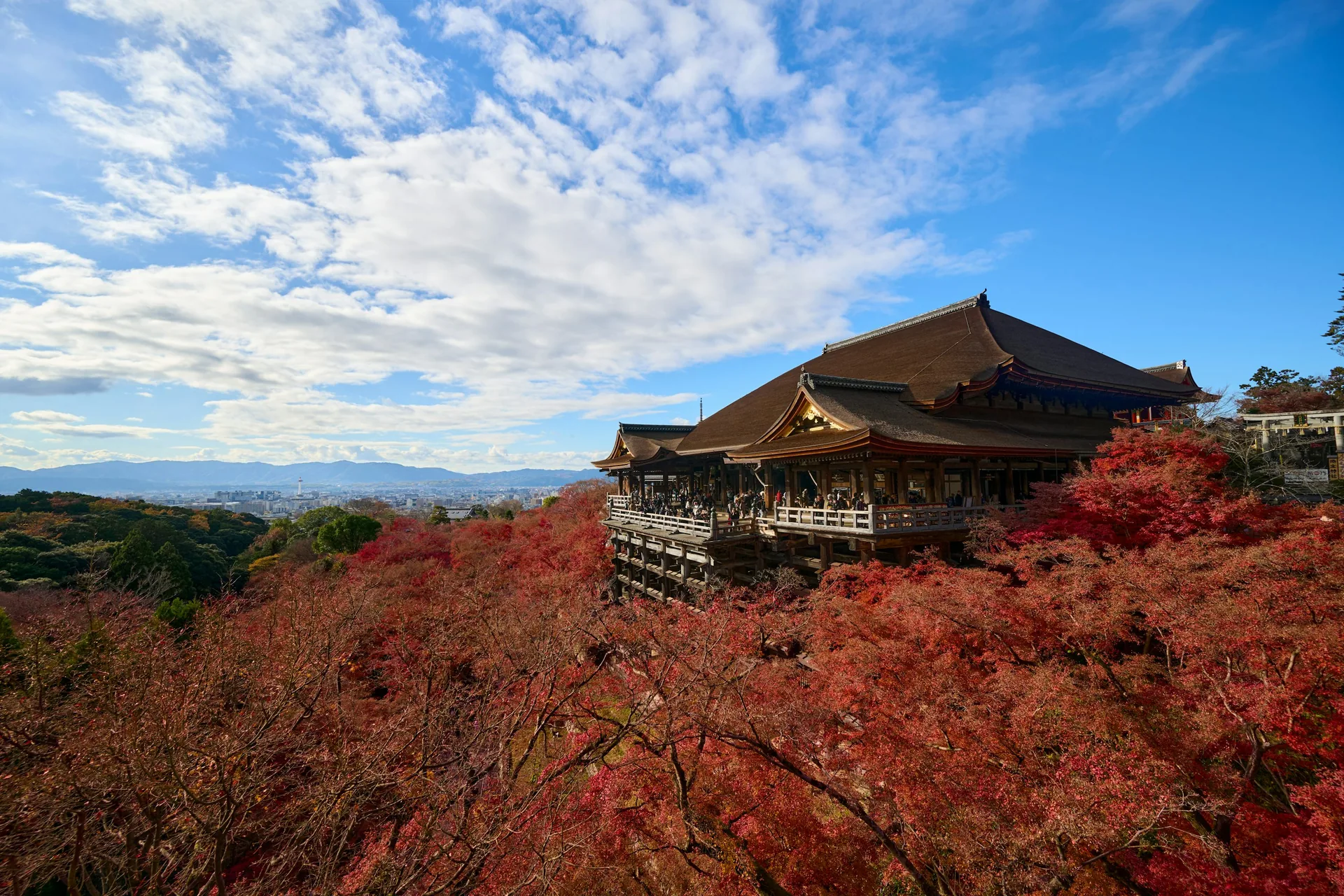
- 9 to 12 months ahead or more: sensible for cherry blossom season, peak autumn foliage such as Kyoto in late November, small groups and complex regional journeys.
- Inside 6 months: still workable when the client has flexibility around route, accommodation or specific experiences.
But the real deadline is not when Japan becomes impossible to book.
It is when good design options start to narrow.
That matters more than any single number of months.
Planning early is not the same as booking early
One of the most common questions travel advisors ask us is simple:
How far in advance should we start planning Japan?
The answer is slightly counterintuitive.
In Japan, starting early does not necessarily mean confirming everything early.
Hotels, ryokan, restaurants and experiences open reservations on different schedules. Future rates may not yet be available. Some suppliers are not ready to confirm inventory even when the overall journey already needs to take shape.
So there are really two timelines: the planning timeline and the booking timeline.
The first should often begin before the second.
Early planning gives us time to decide which places matter, which parts of the journey will be difficult to replace, and which elements need attention as soon as their booking windows open.
The objective is not to lock everything in early. It is to preserve the right choices.
What makes a Japan journey time-sensitive?
Three factors usually matter most.
1. Season
Spring and autumn can change the planning environment quickly.
Kyoto in late November is very different from Kyoto in February. Cherry blossom season brings its own pressure. Japanese domestic travel periods also matter, including Golden Week, Obon and New Year.
These peaks are easy to underestimate from overseas.
Late April, for example, may appear to be an ordinary spring travel period. In Japan, those dates can run directly into Golden Week, affecting accommodation, transport and domestic demand.
This is why international travel dates need to be read against the Japanese calendar as well.
2. Replaceability
Some elements have many alternatives.
Others do not.
A major-city hotel may have several workable substitutes. A small regional ryokan, a specialist guide or a particular cultural experience may have very few.
The more difficult something is to replace, the earlier it should influence the design.
3. Complexity
A couple travelling between Tokyo and Kyoto has many possible combinations.
A small group requiring more than a dozen single rooms, a lead guide, regional stays and fixed experiences has far fewer.
The same applies to journeys involving accessibility requirements, specific room types, dietary needs or several regional destinations.
Complex journeys are not necessarily harder to create. They simply have less tolerance for one missing component.
Where planning pressure tends to appear first
There is no reliable Japan-wide rule such as "ryokan always open six months ahead." Practices vary significantly by property and supplier.
A more useful approach is to understand where pressure is likely to sit, how replaceable each element is, and what an advisor can do early.
| Element | Planning pressure | Replaceability | What to do early |
|---|---|---|---|
| Small regional ryokan | High | Low | Identify the few properties that genuinely fit the journey and check when reservations or group enquiries open |
| Peak-season Kyoto accommodation | High | Medium | Narrow preferred areas and standards early, then keep realistic alternatives |
| Specialist guides | High | Low | Define the language, subject knowledge and personality needed before sourcing begins |
| Small-group accommodation | Very high | Low | Check whether the required room count works for the group as a whole, not just whether individual rooms appear available |
| Specialist or seasonal experiences | High | Low | Identify what is essential about the experience and whether dates or hosts are fixed |
| Major-city accommodation | Medium | Higher | Protect key dates first, but maintain a wider alternative set |
| Standard rail and transfers | Lower | Higher | Usually plan these around the journey rather than allowing them to determine it |
The point is not to create a long list of booking deadlines.
It is to identify which limited component could begin to dictate everything else.
A recent example: when new dates changed the design problem
We recently worked on a small-group journey planned for autumn 2027.
The programme was originally being developed around October. The travel period later shifted into mid-November, with more than a dozen single rooms required each night.
The journey was still almost a year away, but the change immediately affected the design.
A preferred stay in Arashiyama was still available, although the November rate was significantly higher than the October level we had been working with.
In Koyasan, the preferred temple lodging could no longer take the group on the revised date because another group was already booked.
For an individual traveller, an unavailable room may simply mean choosing another property. For a group, one unavailable stay can affect the route as a whole.
The useful question was not whether Koyasan was still possible.
It was what we were actually trying to preserve.
The partner's response made that clearer. The specific temple lodging was not the priority. What mattered was the overnight temple experience, time in Koyasan and, in particular, the opportunity to experience Okunoin.
That changed the sourcing question.
Instead of trying to recreate the original itinerary property by property, we could look for another suitable temple stay while protecting the part of Koyasan that mattered most.
I had previously joined an Okunoin visit led by a Buddhist monk who also works as a guide. I found his interpretation exceptional, which gave us another possible way to strengthen this part of the journey even though the original accommodation was no longer available.
At the time of writing, the programme is still being developed. We are reviewing alternative temple stays and the guiding arrangements rather than treating the loss of the original property as a reason to remove Koyasan.
When one component changes, there is still room to protect the reason it was there in the first place.
Regional Japan creates a different kind of pressure
Regional Japan is often discussed as though it simply requires more lead time.
The reality is more nuanced.
Demand in a regional destination may be lower than in Kyoto or Tokyo, and good accommodation can sometimes remain available later.
But the supply is often much thinner.
There may be only one or two properties that genuinely fit the journey. An English-speaking guide with the right local or specialist knowledge may be difficult to replace. Private transport or a particular experience may only work on certain days.
So regional journeys do not always need to be booked first.
But they often need to be designed early.
A destination does not need to be busy to become a constraint. It only needs to have very few suitable alternatives.
Planning cherry blossom journeys before the forecast
Cherry blossom travel illustrates the same principle in a different way.
The exact timing of the blossoms cannot be known when many important travel decisions need to be made.
Waiting for a precise forecast before designing the journey would mean waiting far too long.
A better approach is to design around a seasonal window rather than a single predicted peak.
Different regions and elevations do not peak at exactly the same time. A well-shaped journey can therefore contain some natural variation without adding unnecessary movement simply to chase the blossoms.
The route still needs to work as a journey.
A recent spring enquiry gave us exactly this situation. Cherry blossoms were a major priority, but the exact dates and all accommodation were not yet confirmed. We could still begin shaping the journey through Kyoto, regional Japan and Tokyo while identifying the places where accommodation choices were likely to narrow first.
The forecast would later help refine the plan.
It did not need to determine when planning began.
Can planning start too early?
Yes.
There is a cost to starting too early if "planning" is interpreted as trying to confirm everything immediately.
Future rates may not yet have been published. Suppliers may not have opened inventory. Deposits and cancellation conditions can create unnecessary commitments. Client priorities can also change.
For quieter travel periods and straightforward journeys through major cities, starting twelve or eighteen months ahead may add little value.
At the early stage, the objective is not confirmation.
It is to establish enough structure to know what deserves attention:
- the likely travel window
- who the travellers are
- what matters most to them
- the elements that genuinely cannot move
- where limited supply may influence the route
That is enough to begin.
Booking can follow when the appropriate windows open.
Earlier is not automatically better. The right timing depends on what the journey could lose by waiting.
What if planning begins inside six months?
A very good Japan journey may still be possible.
The difference is that flexibility becomes more important.
A preferred ryokan may need to change. A regional stop may work better on another night. A different guide may be more realistic. The client may need to choose between keeping a particular date and keeping a particular experience.
The key is not to preserve the first version of the itinerary at all costs.
It is to protect what matters most.
Earlier planning gives us more room to optimise. Later planning requires clearer prioritisation.
Both can work.
So when should you start?
The numbers at the beginning of this article are useful guidelines, but they are not the real test.
A more useful question is:
Which parts of this journey will become difficult to replace if we wait?
Japan does not suddenly become impossible to book. What changes first is the quality of the choices.
The preferred stay becomes a workable stay. The natural route becomes harder to preserve. An experience may still be possible, but not in the way that best suits the traveller.
Good planning is therefore less about booking everything as early as possible and more about understanding what needs protecting before options begin to narrow.
That is the point at which planning should begin.

Keisuke Murayama
Founder & Managing Director, Towaka
CEO, Yamatogokoro Inc.
Keisuke Murayama has worked across Japan's inbound tourism sector since 2007. His work spans media, education, consulting, destination development, tourism policy and travel development.
View profile →Planning Japan and unsure what needs attention first?
Send Towaka your travel window, approximate group size and the priorities that matter most.We can help identify what is likely to be time-sensitive, what can remain flexible, and where starting earlier would materially improve the design.
Related Content
Related Content
What a Good Japan Brief Should Contain — and What It Doesn't Need To
What advisors should clarify before approaching a Japan DMC, and what can remain open to design.
Explore What a Good Japan Brief Should Contain — and What It Doesn't Need To →Overtourism in Japan: Why It's a Capacity Problem, Not a Numbers Problem
Why timing, destination capacity and client fit increasingly need to be considered together.
Explore Overtourism in Japan: Why It's a Capacity Problem, Not a Numbers Problem →Planning
How Towaka approaches the design of journeys in Japan.
Explore Planning →